
If you're making marketing decisions based solely on the numbers inside Google Ads or Meta Ads Manager, you may only be seeing part of the picture.
Many businesses assume that when Google reports 100 conversions and Meta reports 80 conversions, those numbers represent the complete customer journey. Unfortunately, today's privacy landscape has made digital attribution far more complex.
With the decline of third-party cookies, stricter privacy regulations, users switching between multiple devices, browser limitations, and shorter attribution windows, marketers are increasingly working with incomplete data.
The question isn't whether your advertising platforms are missing data.
The question is how much they're missing - and whether your business is making decisions based on incomplete information.
First, Let's Take a Look at Why Ad Platforms No Longer Tell the Whole Story
10 years ago, online advertising was relatively straightforward.
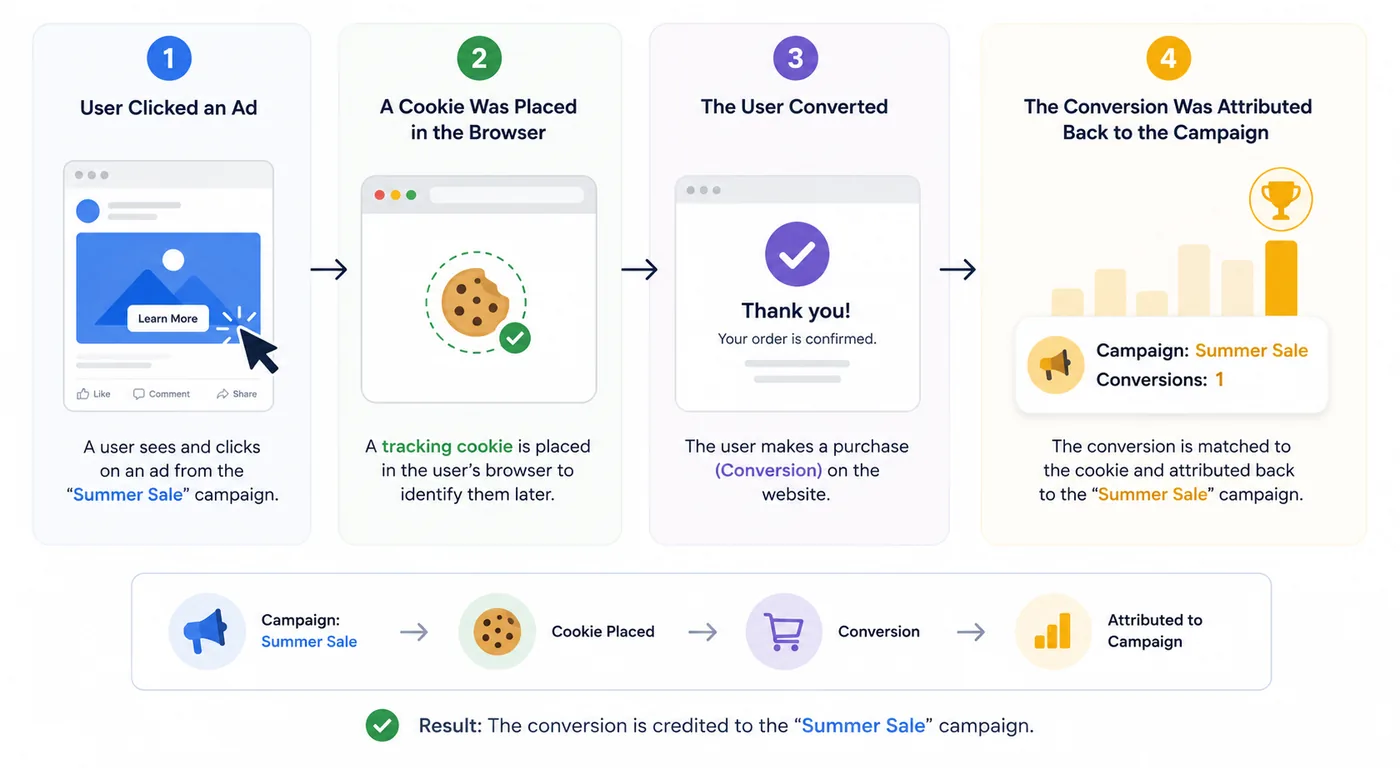
Step 1: A user clicked an ad.
Step 2: A cookie was placed in the browser.
Step 3: The user converted.
Step 4: The conversion was attributed back to the campaign.
Today, that journey looks very different.
A customer may:
- Discover your business through a Meta ad on their mobile phone.
- Search for your business on Google later that day.
- Visit your website from a laptop at work.
- Return 3 days later via an email campaign.
- Call your business before finally becoming a customer.
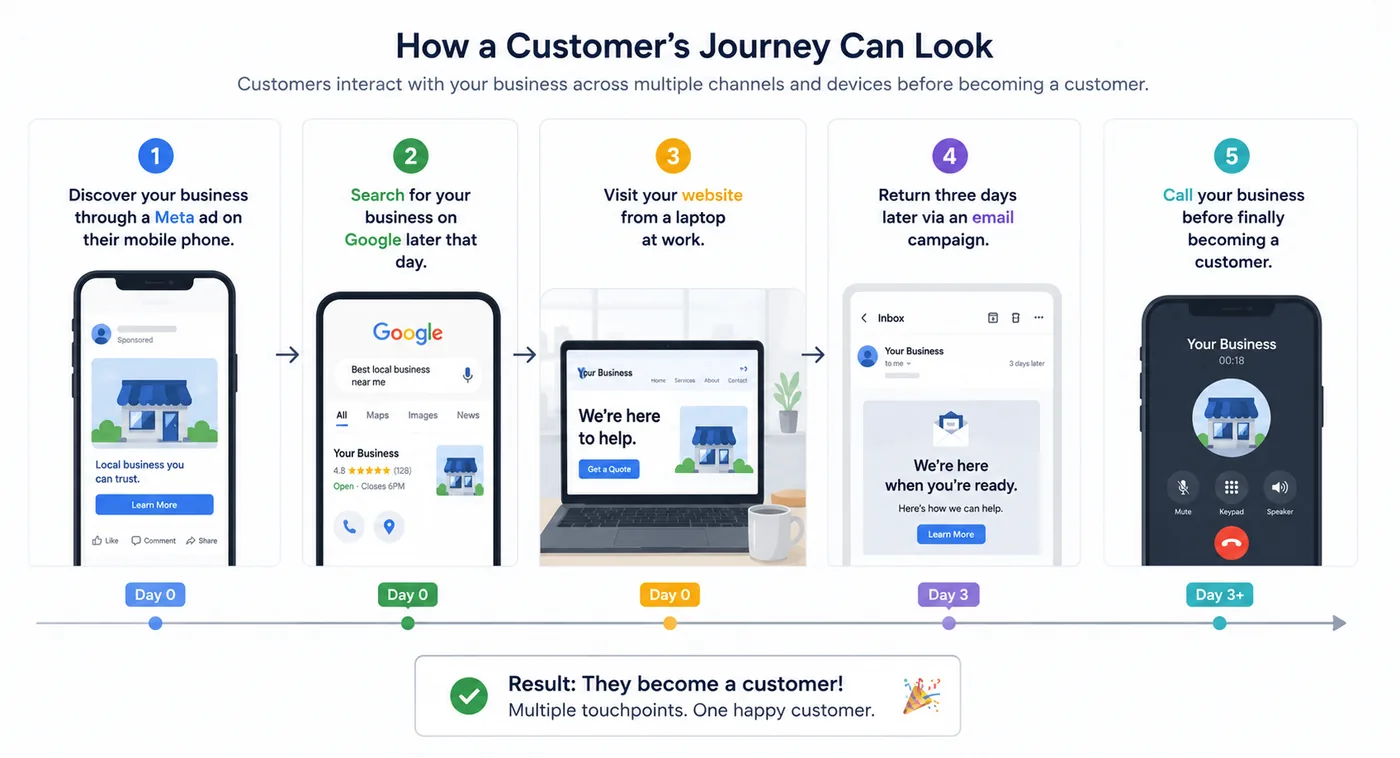
To advertising platforms such as Google and Meta, these interactions may appear as separate touchpoints, multiple unrelated users, rather than one connected customer journey.
To your CRM, they're the same customer.
Without connecting these touchpoints, your attribution becomes fragmented, making campaign performance appear stronger or weaker than it really is.
Browser Tracking vs User Tracking
This is one of the biggest differences in modern marketing measurement.
Browser-Based Tracking
Google and Meta primarily rely on browser and device signals such as:
- Cookies
- Browser sessions
- Device identifiers
- Click identifiers (GCLID, FBCLID)
- Attribution windows
These methods work well when everything happens on the same browser and device.
However, tracking becomes less reliable when users:
- Clear cookies
- Reject consent
- Switch devices
- Use private browsing
- Move between browsers
- Purchase offline
- Convert days or weeks later
User-Based Tracking
Therefore, businesses need to consider a more complete approach, including user-based tracking.
User-based tracking focuses on identifying the person rather than just the browser.
Instead of relying solely on cookies, it connects multiple first-party identifiers throughout the customer journey, creating a more complete picture of how marketing influences revenue.
This approach provides greater visibility into the customer lifecycle - from the first click through to the final sale.
Secondly, Why Cost Per Lead, Sales, or Result Isn't Always Your Real Cost
Many marketers optimise campaigns using metrics such as:
- Cost per Lead (CPL)
- Cost per Purchase (CPA)
- Return on Ad Spend (ROAS)
However, these metrics are only as accurate as the attribution behind them.
If conversions are missed or attributed to the wrong campaign, your reports can show:
- Campaigns being paused even though they're profitable.
- Budgets shifted away from high-performing audiences.
- Inflated acquisition costs.
- Underreported revenue.
When attribution is incomplete, every optimisation decision becomes less reliable.
Essential Google Tracking Setup
A modern Google Ads implementation should include:
- Google Tag Manager
- Google Analytics 4 (GA4)
- Google Ads Conversion Tracking
- Enhanced Conversions
- Conversion Linker
- Consent Mode v2
- Cross-domain tracking (where applicable)
- Server-side tagging (recommended for advanced implementations)
- Offline Conversion Import from your CRM
- Enhanced Conversions for Leads
- Phone call conversion tracking
- Custom event tracking
- First-party data collection
Essential Meta Tracking Setup
For Meta, businesses should implement:
- Meta Pixel
- Conversions API (CAPI)
- Advanced Matching
- Server-side event tracking
- Offline Events integration
- CRM integration
- Standard and custom events
- Event deduplication
- Aggregated Event Measurement
- Consent management
- First-party customer data
- Lead quality tracking
You may already be aware of the tracking required. However, there's still one major issue...
The Missing Piece: CRM Attribution
Even with all the correct tracking tags in place, there's still a gap.
Most businesses stop measuring at the point where someone submits a form.
But what happens next?
Question 1: Did they answer the phone?
Question 2: Did they book an appointment?
Question 3: Did they attend?
Question 4: Did they become a paying customer?
Question 5: What was their lifetime value?
Advertising platforms often can't answer these questions on their own.
Guess what? Your CRM can.
Closing the Attribution Gap with GrowthMesh
At GrowthMesh, we take attribution beyond the browser.
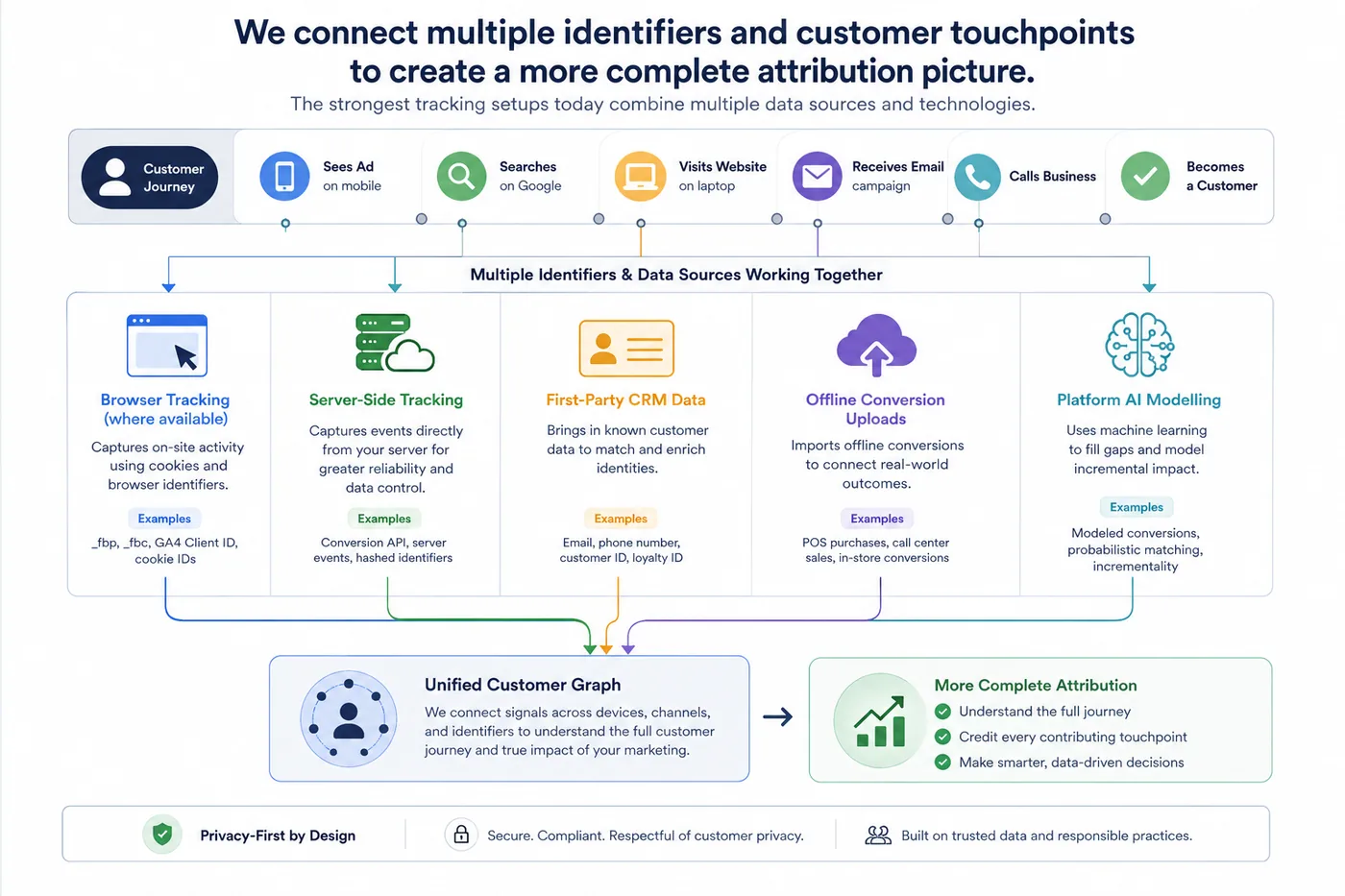
We connect multiple identifiers and customer touchpoints to create a more complete attribution picture. This is because we understand that the strongest tracking setups today often combine:
- Browser tracking (where available)
- Server-side tracking
- First-party CRM data
- Offline conversion uploads
- Platform AI modelling
Rather than relying solely on cookies or platform-reported conversions, our system connects your advertising platforms with your CRM to create a much more complete view of the customer journey.
By feeding qualified conversion data back into Google Ads and Meta, campaigns can optimise based on actual business outcomes - not just form submissions or button clicks.
Our attribution framework can utilise multiple first-party identifiers and technical signals, including:
- Click IDs (GCLID, FBCLID)
- Session IDs
- IP address (where appropriate and compliant)
- Device identifiers
- Email address
- Phone number
- CRM contact ID
- Lead ID
- User ID
- Conversion timestamps
- Landing page information
- Campaign parameters (UTMs)
- Additional first-party identifiers
By stitching these data points, businesses gain greater transparency into which campaigns are generating qualified leads and real revenue.
The result is a more complete attribution model that helps reduce blind spots, improve optimisation decisions, and increase confidence in reporting.
In Conclusion: Better Data Leads to Better Decisions
The future of digital marketing isn't about collecting more data.
It's about connecting the data you already have.
When advertising platforms, analytics, your CRM, and offline conversions all work together, you're no longer optimising campaigns based on assumptions - you're optimising based on the outcomes that matter most to your business.
That's the difference between measuring clicks and measuring growth.
At GrowthMesh, we help businesses build a unified attribution ecosystem that turns fragmented marketing data into actionable business intelligence - giving you the confidence to make smarter decisions with greater transparency.
Enquire now or book an audit today with our Growth Specialists, or explore our Attribution and Tracking Setup service.

